

The penthouse.
Two researchers once rented a posh penthouse on Manhattan’s East Side to interview nine people worth eight figures each. They hired gourmet food designers for the evening. Four pâtés. Three kinds of caviar. Cases of 1970 Bordeaux.
The first millionaire showed up in a well-worn suit, got offered the wine, and said: “I drink scotch and two kinds of beer. Free and BUDWEISER!”
For two hours, nine millionaires ate the gourmet crackers and left the spread alone. The caviar got finished by the bankers in the next room.
The researchers went home and eventually wrote the book that made the scene famous. Their finding fits in a sentence: they had been looking for wealth in the wrong neighborhoods the whole time.
Now that’s the book The Millionaire Next Door.
Two line items.
Dropbox, since 2008. I was there at launch, back when the referral program paid you 500 megabytes a friend and we all spammed our address books for free space.
Evernote, also since 2008. I joined the year it went cross-platform and paid for Premium as soon as there was a Premium to pay for.
Eighteen years each. Household furniture at this point.
Then this year I finally sat down and trimmed my subscription list, which had grown embarrassingly long. These two didn’t survive the pass. There was no drama on the way out. Two shrugs.
1. The long goodbye.
Evernote went first, and that one was a relationship.
The elephant promised to remember everything, and I held up my end. I treated it as a second brain and dumped my whole life OS into it: notes, ideas, receipts, half the web clipped page by page. Thousands of notes. The sheer volume was most of the reason I paid.
Then the rebuild came, and the product stopped feeling like mine. Features I leaned on daily got worse or vanished. I spent years hunting for a replacement. At one point I gave up hunting and tried to build my own.
Notion ended the search. It did what I actually needed, and lately its AI does things my old elephant never dreamed of. My notes had drifted years before my wallet followed. I’d even written about the move here (“Why I Stopped Organizing My Second Brain”) while I was still, absurdly, paying.
Evernote’s AI arrived eventually too. It showed up in the feature names and the changelog. Never in my week.
Cancelling took less thought than a lunch order. Shrug one.
2. The fast goodbye.
Dropbox hurt differently, because I still admired them.
The forgotten-thumb-drive company. The founders who drove a rented Prius to go tell Steve Jobs no. For eighteen years my important files lived there because I needed them on every machine I owned, and that part never once let me down.
What they never managed to do was convert me to anything else. Not the e-signatures, not the document sharing, none of the acquisitions I mostly read about and forgot. The upsells went by like freeway billboards. The one extra that stuck was almost embarrassing in its simplicity: scanning receipts to PDF so the expense report can wait till later. A killer feature, and one I could replace in an afternoon.
So an eighteen-year subscription was standing on two legs. Storage, and a scanner.
Then Google edited a pricing page. I was already on their AI plan (it came as a trial with a phone I bought, and it stuck), and this spring that same plan’s storage went from 2 terabytes to 5. That was the entire event. My mail already lived with Google. My photos. My assistant. Now my files fit too. I did the math standing up and cancelled in four minutes.
Shrug two. That one bothered me for weeks. Eighteen years and genuine admiration, and neither survived a pricing-page edit. So what exactly is protecting the rest of my subscriptions?
The room, again.
It took me a few weeks to place those two shrugs. Then the penthouse came back to mind. There are millions of users just like me out there right now, trimming subscription lists that got too long, voting with their wallets one renewal at a time. Every shrug is a vote nobody hears.
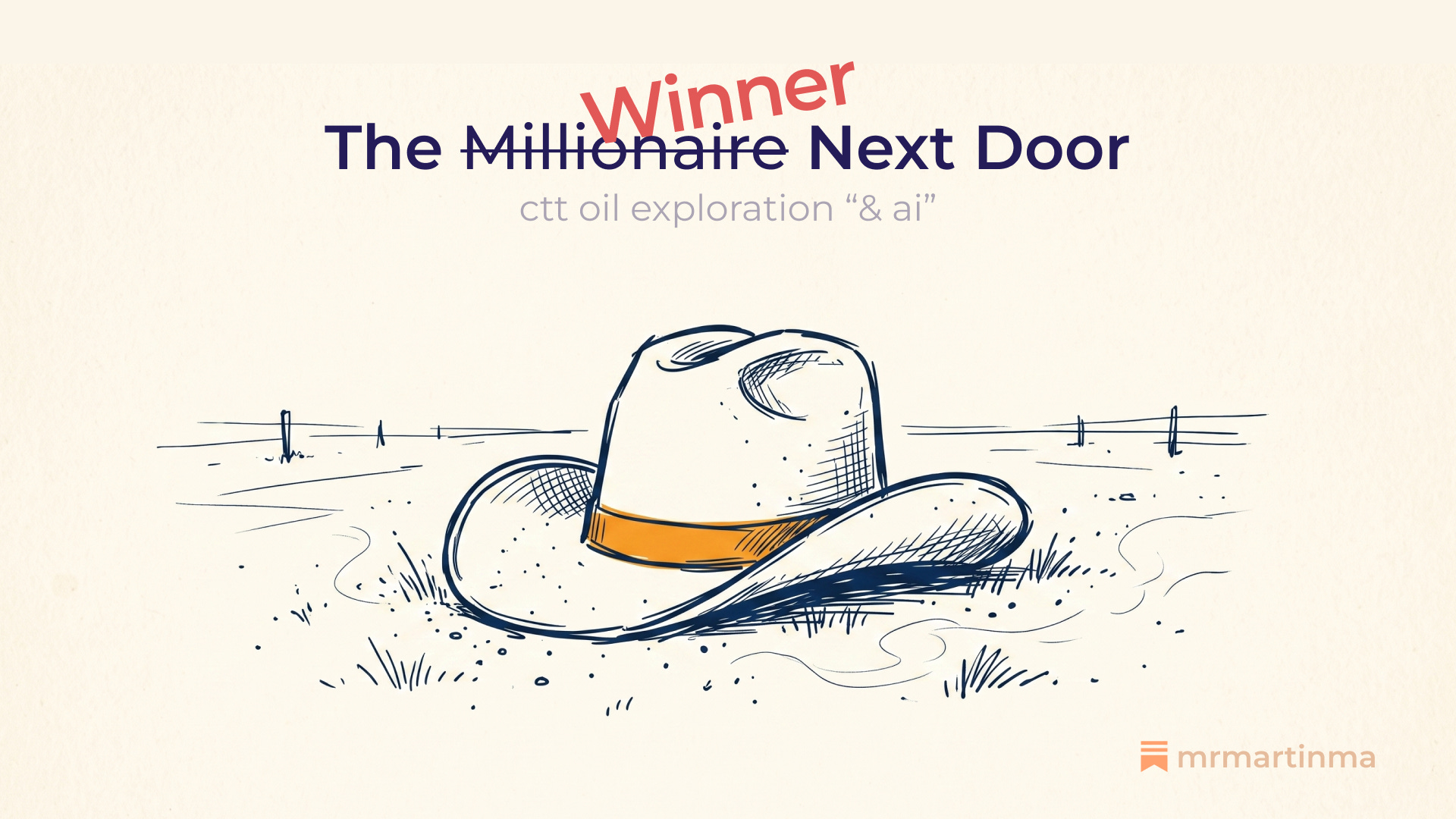
The products that wore their AI loudly had lost my vote. AI in the feature names, AI in the tab, AI all through the earnings call. There’s a scene in the Landman season finale where Billy Bob Thornton’s character needs a company name in the time it takes to write a check, so he names it “CTT Oil Exploration & Cattle.” There are no cattle. The word was just free.
The products that won me asked for nothing. They just kept accumulating me. Google never pitched me an AI storage feature. It held my mail, my photos, my phone, and it knew the shape of my days well enough to slide AI underneath them without asking me to change a habit. I say that as a Pixel fan who found the most recent Pixel event a letdown. It didn’t matter. The habits held.
Notion didn’t win me with an assistant. It spent years learning how my notes wanted to work, then put AI inside that.
Nobody kept me by adding AI to their product. The ones who kept me owned a workflow deeply enough to AI-fy it in place.
That old book, The Millionaire Next Door, put its whole finding in one line: wealth is what you accumulate, not what you spend. Stanley and Danko meant households. It reads like a software strategy memo now.
The biggest wallets I know.
One wallet proves nothing, though, and I sit in rooms where the other side looks strong.
Companies are buying AI seats by the tens of thousands right now, and the surveys that follow keep finding two or three people in ten actually touching theirs in a given week. Bought seats, borrowed cattle.
Then again, the last platform shift this size mostly went to the incumbents. And when I watch behavior instead of announcements, the giants stop looking slow. The sharpest accumulation move I saw all year was that quiet pricing-page edit. And within about a year of each other, ChatGPT, Gemini, and Claude all shipped memory. Storage stopped being the thing worth accumulating.
Now it’s me.
What I ask now.
Not “who has AI.” Everyone at that penthouse focus group owned a suit.
I ask who is accumulating the customer: their workflow, their context, their habits. The herd. It’s what my two shrugs were counting all along, before I knew I was counting.
I’ve started running the same test on the products around me at work, and it stings a little. Some of what we build owns a workflow. Some of it rents attention and calls it a moat. AI bolted onto the rented kind is a hat, and users can tell.
If you’re the one buying AI rather than building it, the test gets even simpler. A few months after the rollout, skip the seat count and watch a Tuesday. What people do without being reminded is the number I’d trust.
And either way, run tonight’s cheap experiment on yourself. Open your subscriptions, personal or company, and find the one you’d cancel with a shrug tomorrow. Then ask who made leaving that easy.
That’s your winner next door. They probably don’t look like one.
#Leadership #AI #ProductStrategy #EngineeringLeadership #SaaS #ProductManagement #TechStrategy #Moats