

How do you really “come up with strategy”?
If you’re honest, the process often feels like chaos. It’s a “Top 10” priority list that somehow has 35 items. It’s a frantic reaction to the loudest stakeholder, the latest market fire, or the “AI mandate” that just dropped from corporate.
It feels like guesswork. It’s stressful, reactive, and it’s an incredibly stressful way to lead.
The problem isn’t you; it’s the metaphor. We’re all taught to treat strategy as a static map we’re supposed to “find” - a perfect, pre-drawn path to a fixed destination.
But strategy isn’t a map you find. It’s a portfolio you manage.
This one shift changes your entire job.
It reframes you from “visionary fortune-teller” to “active, data-driven investor”. Your goal is no longer to predict the future. Your goal is to build a portfolio of assets - people, systems, and projects - that is resilient, high-growth, and ready for any future (especially an AI-driven one).
You don’t need a crystal ball. You need an investor’s system. Here is the 3-move system that moves you from chaos to clarity.
Move 1: The “Portfolio Audit”
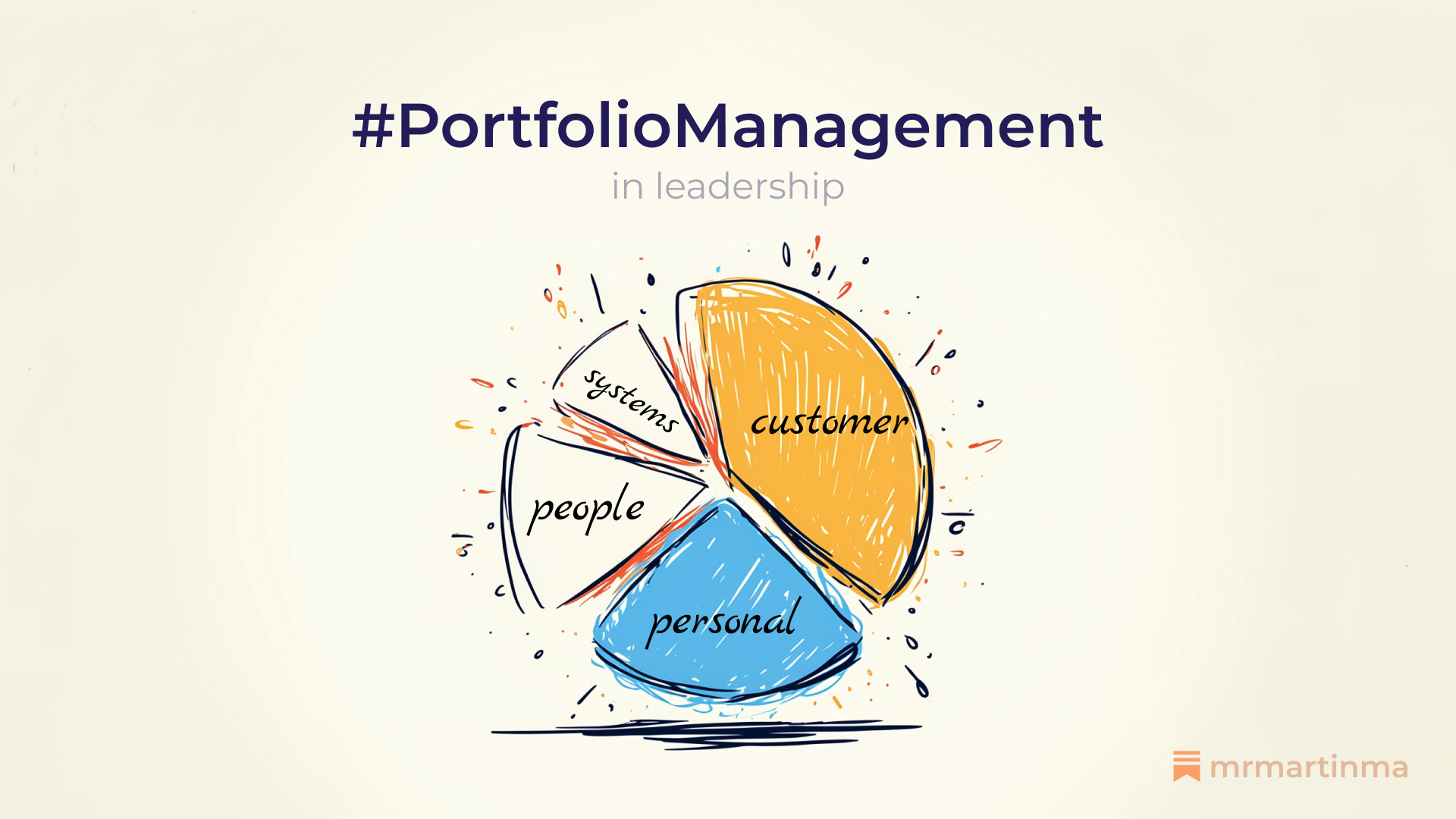
An investor cannot make moves until they know what’s in their fund. You can’t, either. This isn’t a to-do list; it’s a deep, qualitative audit of your true assets. I’ve found it’s not 100 little things, but 4 big “funds” that matter.
1. Your Customer & Vision Fund: This is your Why. What is the core user problem you own? What is your “customer obsession“? The audit reveals the gap between your stated vision (”Innovate with AI”) and your actual allocation (80% of your fund is allocated to “Answering legacy stakeholder emails”).
2. Your People & Culture Fund: This is your Who. The key is auditing skills, not just headcount. Do you have a portfolio of “AI-native” skills, or are you over-invested in a depreciating “legacy” skillset? The audit reveals the true capability of your team to execute the vision.
3. Your Systems & Execution Fund: This is your How. And tools in your tool belt. Is your tech stack a high-leverage asset that enables AI experiments? Or is it a high-risk liability of brittle code that blocks any new initiative? This fund audits the tools and processes you actually have, not the ones you wish you had.
4. Your Personal Capacity Fund: This is your Energy. And where you spend your time. Where is your own time and focus allocated? The audit reveals the painful truth: are you the “Chief Strategist,” or have you become the “Chief Firefighter”?
Move 2: Identify Your Levers
Your audit (Move 1) shows you what you have. This move is about how you can change it. An investor with no capital cannot trade. A leader with no levers cannot lead. (I call it tools in the tool belt sometimes, too.)
This is your inventory of the tools and levers available to rebalance your portfolio.
1. Capital Levers: This is your budget, your Opex/Capex. This is your “dry powder“. Do you have the purchasing power to buy a new AI tool? Do you have the capital to fund a new R&D POC spike?
2. Talent Levers: Your “People Fund” audit showed you what skills you and your team have. Your levers are hiring, upskilling, and re-allocating. Can you move your best engineer from a legacy “bond” to a high-growth “bet”? That is a powerful lever.
3. Platform Levers: Your “Systems Fund” isn’t just a tool; it’s a platform that runs all your services and operations. Does your platform allow for rapid, low-cost AI experimentation? Or is your primary platform lever a “big, 12-month re-platforming project”? You must know the difference.
4. Process Levers: This is your authority. Can you decisively “SELL” (divest from) a zombie project? Can you greenlight a new “BUY” (a new initiative)? This is the lever of permission and divestment.
Move 3: Take Action from The Investor’s POV
You have your audit (Move 1) and your inventory of levers (Move 2). Now you don’t just “execute.” You make the trade.
The pioneer of Modern Portfolio Theory, Harry Markowitz, gave us the 3 pillars. Here’s how a leader uses them:
1. The “Bet” (Risk & Return): You stop seeing “tasks” and start seeing “bets”. Is this new AI project a high-risk, high-return bet? Is maintaining this legacy system a low-risk, low-return ‘bond’ that’s eating your capital and killing morale? You must label your bets to understand your portfolio’s risk profile.
2. The “Balance” (Diversification): You stop “going all in” on one single project. You balance your portfolio - intentionally mixing high-growth, speculative AI bets with the stable, “must-not-fail” core products that pay the bills. A great leader, like a great investor, manages the entire portfolio, not just the single “hot stock.”
3. The “Trade” (Rebalancing): This is the action. Your job is to actively move your portfolio to a more “Efficient Frontier“ - the point of maximum impact for your team’s effort, using the levers you identified in Move 2. This is where you SELL (divest from low-return projects) to BUY (fund high-growth initiatives) and COMPOUND (double-down on your best people and systems). Though I can see you making a point of the “minimizing risk” is not necessarily great - let’s just call it “educated risk” that protects your moonshots!
What We Learned
The old model of strategy was to find a perfect, static map and then execute it relentlessly. This is why “strategy” so often feels like a lie - the map is obsolete the moment it’s printed, and you are left managing a crisis of execution.
The portfolio-led model is a different system entirely. It accepts that the world is dynamic. It doesn’t rely on a map; it relies on a system of continuous management.
This system is the job.
Auditing your assets (Move 1), inventorying your levers of change (Move 2), and making disciplined, data-informed trades (Move 3) is not the pre-work to strategy.
That IS the strategy.
Now look at the four “funds” in your portfolio - Customer, People, Systems, Personal.
What is the most significant misalignment your audit (Move 1) reveals?
And what is the one lever (Move 2) you have the power to pull this week to begin rebalancing it?