

Somewhere right now, a 2025 CS grad is refreshing their inbox for the 40th time this week. Every listing wants three years of experience with a tool that’s been out for eighteen months. They did everything right. Degree. Side projects. LeetCode until their eyes crossed. They graduated into a market that moved out from under them while they were still studying for it.
Somewhere else, a ten-year veteran just opened a resume they haven’t touched since 2016. They’re staring at job descriptions that feel like they’re written in a language they used to speak. Last year they were the person companies wanted. Now they’re not sure if anyone’s even reading the application.
And somewhere, maybe in the same building where the all-hands just ended, a manager is sitting in their car, engine off, rehearsing confidence for tomorrow’s standup. They’ve already had to deliver the news to people they hired. Now they’re wondering if the next round is them.
Some fights are loud. Layoffs make the news. Markets crash in public. CEOs post restructuring memos with the word “exciting” in the first paragraph while their stock ticks up.
But some fights are quiet. Someone is carrying something into every Zoom call, every interview, every morning. A fight that has nothing to do with a job listing. Something heavier. Something that doesn’t fit in a LinkedIn post. They’re fighting it anyway.
And some fights are silent. Months of applications into a void. Not rejection. Not feedback. Just the inbox and the absence of a reply. The slow, invisible erosion of confidence that nobody tells you is normal.
I see you. All of you.
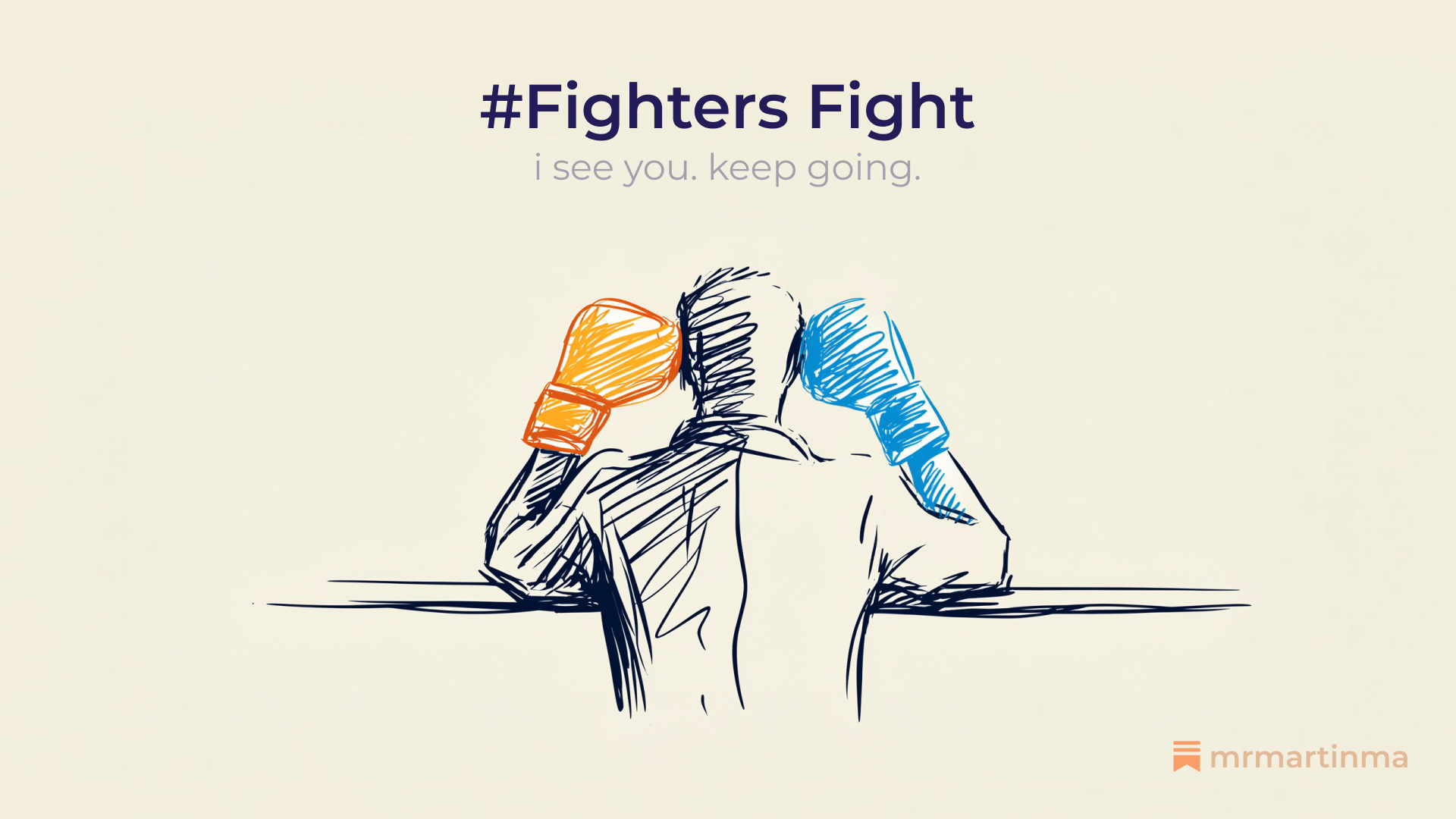
Fighters fight.
This isn’t in your head
You already feel this. But in case you need someone to say it out loud: only 22% of workers feel confident their job is safe right now. Tech cuts are up 51% over last year, and AI is the named reason in over 12,000 job cut plans so far in 2026. Jack Dorsey cut half his company and told the rest of the industry “most companies are late.”
For new graduates, the picture is worse. 40% of early-career workers have changed or considered changing their career plans because of AI. That’s not a soft market. That’s a generation entering the workforce into a headwind that isn’t their fault.
You’re not imagining it. And you’re not alone in it.
The numbers aren’t the point. You already know the numbers. You’re living them. The point is this: what you’re feeling is proportional to what’s happening. Being scared right now doesn’t mean you’re weak. It means you’re paying attention.
What fighting actually looks like
Fighting isn’t hustle. It’s not “grind harder.” It’s not someone on a stage telling you to wake up at 4 AM and visualize your future. It’s not toxic positivity wearing boxing gloves.
Fighting is a stance. In boxing, your stance is the most honest thing about you. Weight forward, hands up, chin tucked. It’s not a punch. It’s what comes before the punch. It tells the other fighter everything — whether you’re pressing forward or backing up, whether you believe you belong in this ring or you’re just waiting for it to end. You choose your stance before a single punch is thrown.
That’s what fighting looks like right now. Not a knockout. Not a highlight reel. A decision to engage when everything around you says wait, freeze, or scroll LinkedIn for one more hour and call it research.
For the fresh grad, where 39% of workers with less than a year of experience say AI has made it harder to find a job, fighting looks like building something nobody asked for and shipping it anyway. Not because a recruiter told you to. Because the degree and the bootcamp and the portfolio taught you to solve problems, and that mind, the one that breaks things down and figures them out, is yours. The tools changed. That didn’t.
And the same AI that’s changing the game? It helps people just starting out more than anyone else. It’s the best sparring partner you’ve ever had. Nobody can automate the person who looks at a mess and says “I can fix this.” Fighters fight. You didn’t come this far to stop now.
For the veteran, fighting looks like learning the new tool. Not because you wanted to. Not because it’s fair that ten years of expertise doesn’t count the way it used to. But because fighters don’t wait for the game to come back to them. Your ten years aren’t obsolete. Ten years of watching systems break, of pattern-matching across failures, of knowing what questions to ask before the first line of code ships. That’s leverage. That’s the part AI can’t do. Fighters fight. And you’ve been in late rounds before.
For the manager carrying the weight of their team’s future while quietly wondering about their own? Fighting looks like staying in the ring. Not bailing to a “safe” job that doesn’t exist. Rebuilding. The fact that you feel the weight of other people’s careers means you’re exactly the kind of leader who should be in this fight. Even the corner team needs a corner. Fighters fight. Even when the fight is for someone other than yourself.
For the person in the silence. Still applying. Still preparing. Still showing up for interviews that ghost them. The silence is not a verdict. It’s a round. And you’re still in it. Every application is a swing. Every follow-up is a jab. The scorecards in this fight aren’t posted in real-time. You don’t know if you’re behind. You only know you’re tired. Fighters fight. Keep swinging.
Your corner
In boxing, even in the loneliest sport on earth, nobody fights alone. Between rounds there’s a stool, a cutman who works on the damage you can’t pretend away, and a chief second who says one thing. One. Because when you’ve been fighting, your brain can’t hold a paragraph. It can hold a sentence.
If you’re in the ring right now, who’s in your corner? A mentor. A friend who texts back without needing an update. A community that doesn’t judge. Someone who’s been where you are and remembers what it felt like.
And if you know someone who’s fighting, be their corner. Not advice. Not a five-step plan. Just: I see you. Keep going.
Fighters fight
You’re already fighting. I know you are.
The fact that you’re still here — still reading, still applying, still showing up for the standup, still learning the tool you didn’t ask to learn, still getting out of bed on the mornings when nobody would blame you for staying in it. That’s fighting.
Some fights are public. Promotions, job offers, the LinkedIn post about the new role with the heart emoji. Those are the fights people see.
But the fight nobody sees — the 200th application, the interview you prepped for all weekend that ended in silence, the morning after the news, the drive home after the all-hands — that’s where fighters live. Not in the victory. In the stance. In the showing up.
Fighters fight.
That’s you.
Keep going.
#Leadership #CareerAdvice #AI #FightersFight #Resilience #TechCareers #FutureOfWork
Well done, Martin. I really liked this.